
Will There Be Blood?
We're running out of oil. How much is left?

Before the war, roughly 21 million barrels of oil and refined products transited the Strait of Hormuz every day, almost exactly what the U.S. consumes in a single day. Today, the number is close to zero.
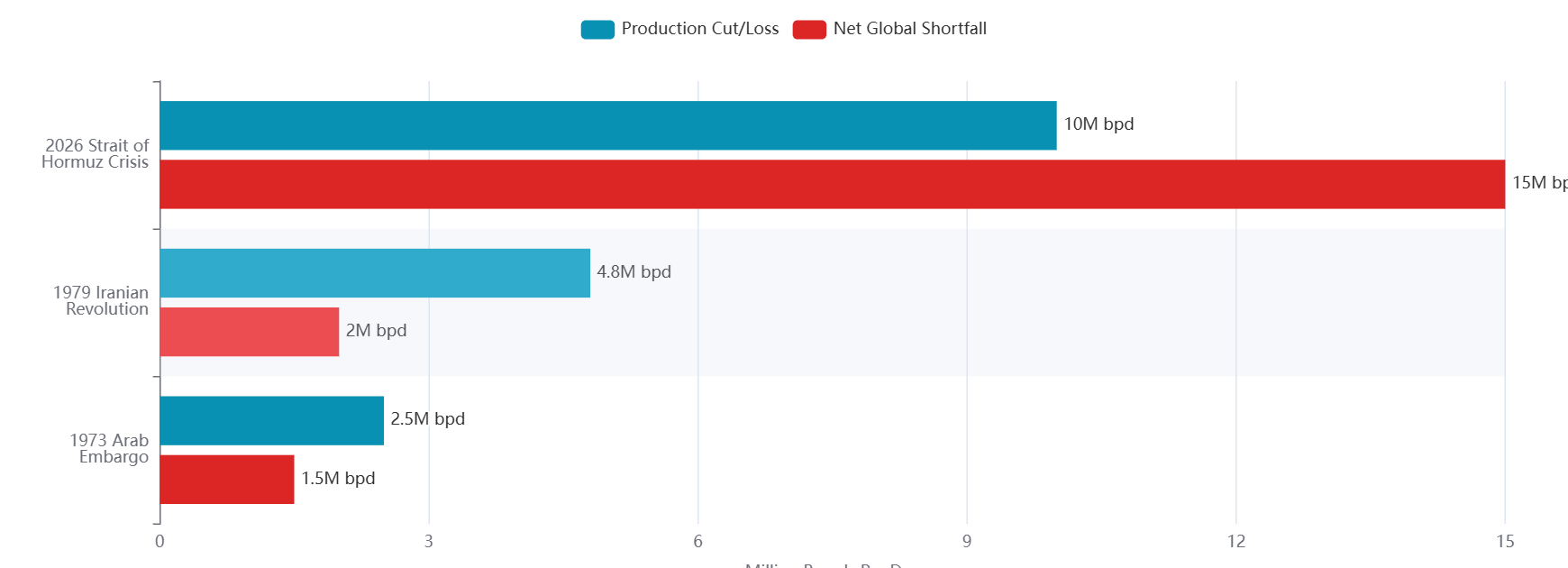
Some Persian Gulf production is escaping via three bypass pipelines, but the arithmetic is brutal: 11.5 million barrels per day are offline, roughly 11 percent of global supply. We have never lost that much, that fast.
Previous oil shocks—the Iranian Revolution, the Iran-Iraq War—involved large percentage losses spread over 12 to 24 months. This one happened in a day or two. Normalized to rate of loss, this disruption is 65 to 99 times greater than the 1978-1979 shock, which was the largest the modern world had ever seen.
Why we don’t feel it yet
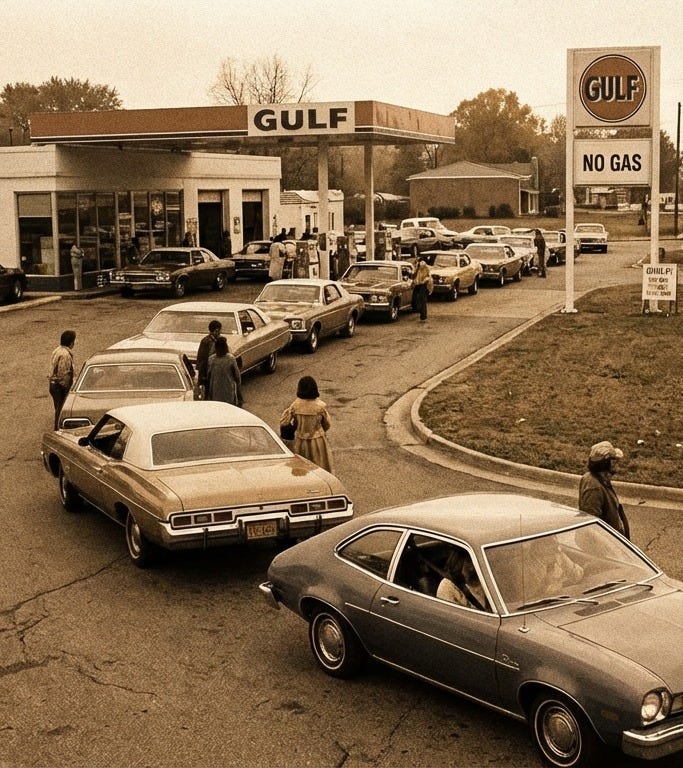
If this is a crisis a hundred times worse than anything in living memory, why are most Americans going about their lives? Because we’re living off a savings account and treating it like income.
The last tankers to exit the Strait before the war have only recently arrived at their destinations. In East Asia and Africa, where those deliveries have already come and gone, the shortages are real and worsening. In the U.S., the final pre-war shipments just landed, so the gap hasn’t materialized yet.
Meanwhile, the OECD world has been drawing down strategic petroleum reserves at the maximum physically possible rate, about two million barrels a day. That buys time. It doesn’t buy indefinitely.
Peace won’t fix it
There are hundreds of tankers currently parked inside the Strait. If hostilities ended today and the waterway reopened, it would still take two to three months before any of that oil reached its destinations. Those vessels need to reposition, queue up, and transit a strait that is still mined.
Marine insurers have also effectively exited the market. No underwriter will cover a vessel transiting Hormuz right now, which means no captain can legally sail regardless of what diplomats announce. Middle Eastern production facilities that were shut in will take months to restart. Every one of these steps is sequential, not parallel.
The best case is that we remain supply-constrained through the end of 2026. By July, gasoline and diesel prices are likely to reach levels where a significant portion of the American public simply cannot afford to fill their tanks.
Diesel is the real problem
Gas prices get the headlines. But diesel is the circulatory system of the physical economy. It moves freight by truck, powers farm equipment, runs construction machinery, drives the supply chains behind everything on a store shelf or restaurant menu. When diesel gets expensive, the cost ripples into virtually every physical good in the economy. When diesel gets scarce, the economy doesn’t slow; it seizes.
American farmers are entering the spring planting season with diesel prices already exceeding five dollars a gallon, leading the American Farm Bureau to describe the situation for corn and grain production as catastrophic. That’s before the full supply crunch arrives.
Food is next
The Strait of Hormuz also carries the fertilizer the world depends on to grow food. The closure has produced a roughly 33 percent contraction in the global fertilizer supply chain, and the region’s annual urea exports—about 22 million tons—have effectively halted. Roughly 46 percent of global urea supply originates in the Gulf.
Higher fertilizer prices increase the cost of growing crops such as corn, wheat, and rice. Energy costs show up in almost every step of the food chain—from planting and harvesting to processing, refrigeration, and transportation. Shipping disruptions strand food shipments, from rice and meat to coffee, forcing importers to pay more for alternative supplies.
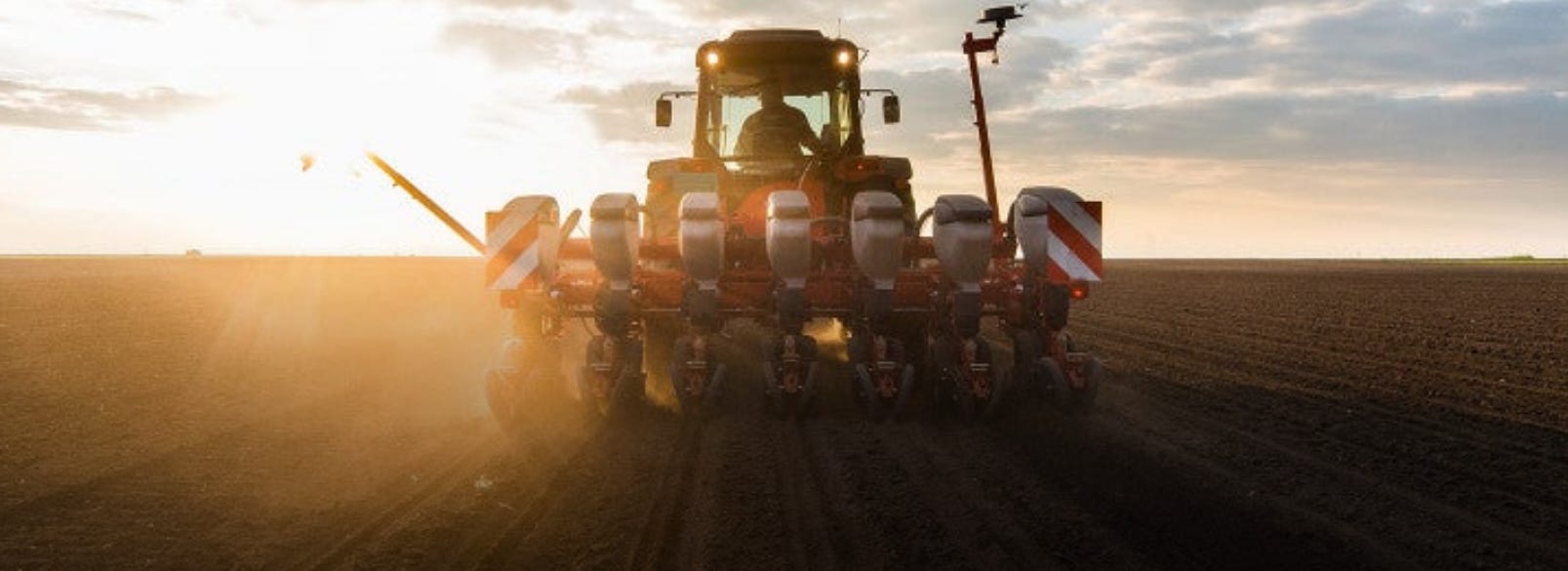
The crisis has hit during the spring planting season, when farmers typically purchase fertilizer for the next harvest. If they can’t secure adequate supply, or if prices are prohibitive, crop yields decline. The FAO has warned that the fertilizer scarcity will lead to lower yields and tightening food supplies through the second half of 2026 and into 2027. The UN World Food Program predicts that an additional 45 million people could face food insecurity by the end of 2026.
What the market is hiding
Futures prices—Brent crude in the $95 to $110 range—suggest elevated but manageable conditions. That reading is false.
There are two oil markets right now. The financial market trades contracts expiring months out. The physical market, where refiners actually buy crude today, is running at $140 to $160 a barrel. A refinery paying $150 for crude must price its products high enough to maintain its margin. If it can’t, it cuts throughput. And a refinery cutting throughput creates the same downstream shortages as an oil field going dark.
Big Mistake
The decision to launch a war against Iran without accounting for what closing Hormuz would mean for the global economy is the biggest military blunder since Napoleon invaded Russia in 1812. Before, it was a battlefield outcome. Now, it’s energy blindness: a strategic inability to trace massive consequences from a single action.
We’re living in the lag. Oil that was supposed to flow isn’t flowing. Fertilizer isn’t arriving. Tankers are parked. Insurance markets are closed. When will this catch up with daily life? By every reasonable estimate, that reckoning is weeks away, not months.